

Binary jugs
2018
Ceramic, 3D ceramic printing
Various sizes
Introduction簡介
Digital craftsmanship
數位工藝
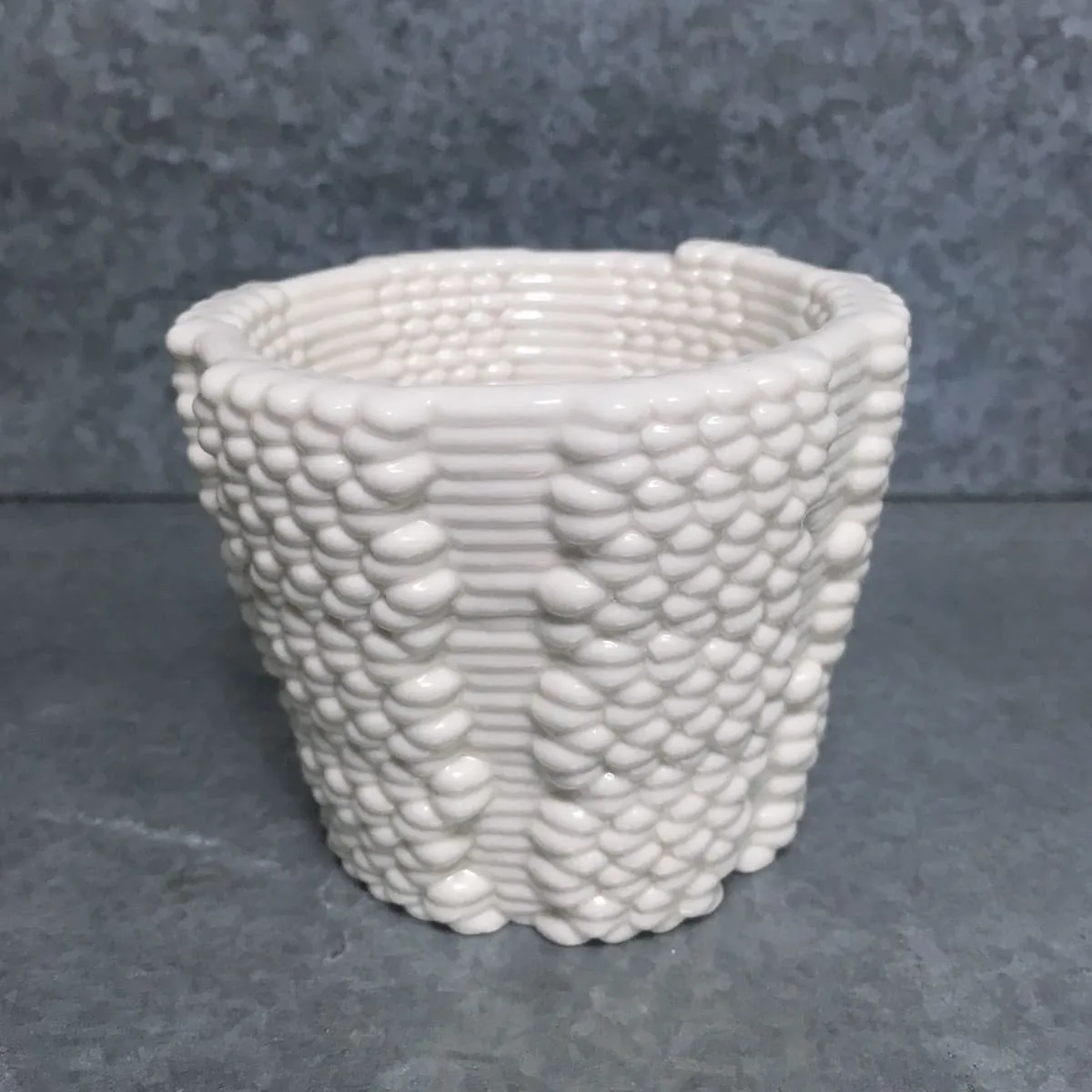
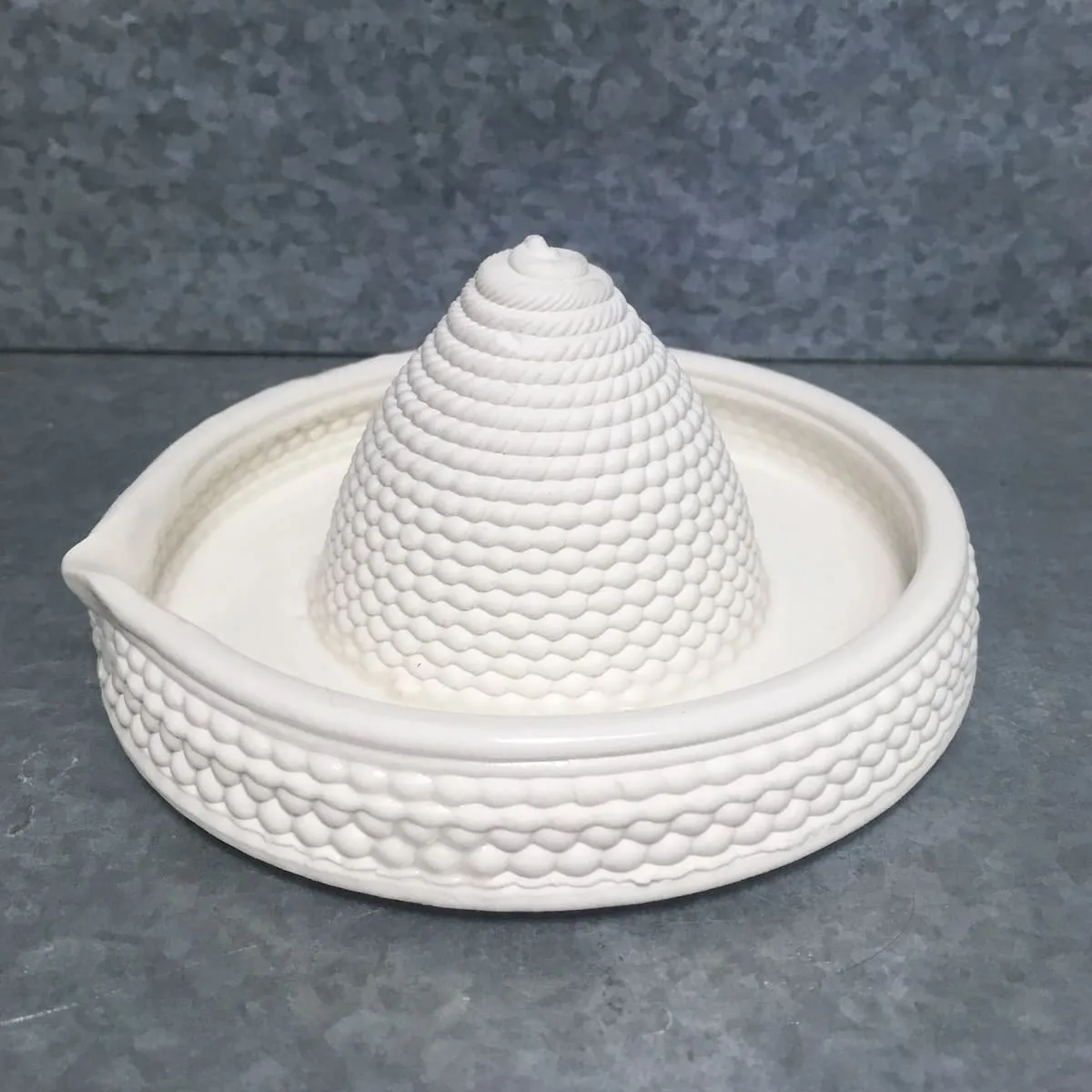
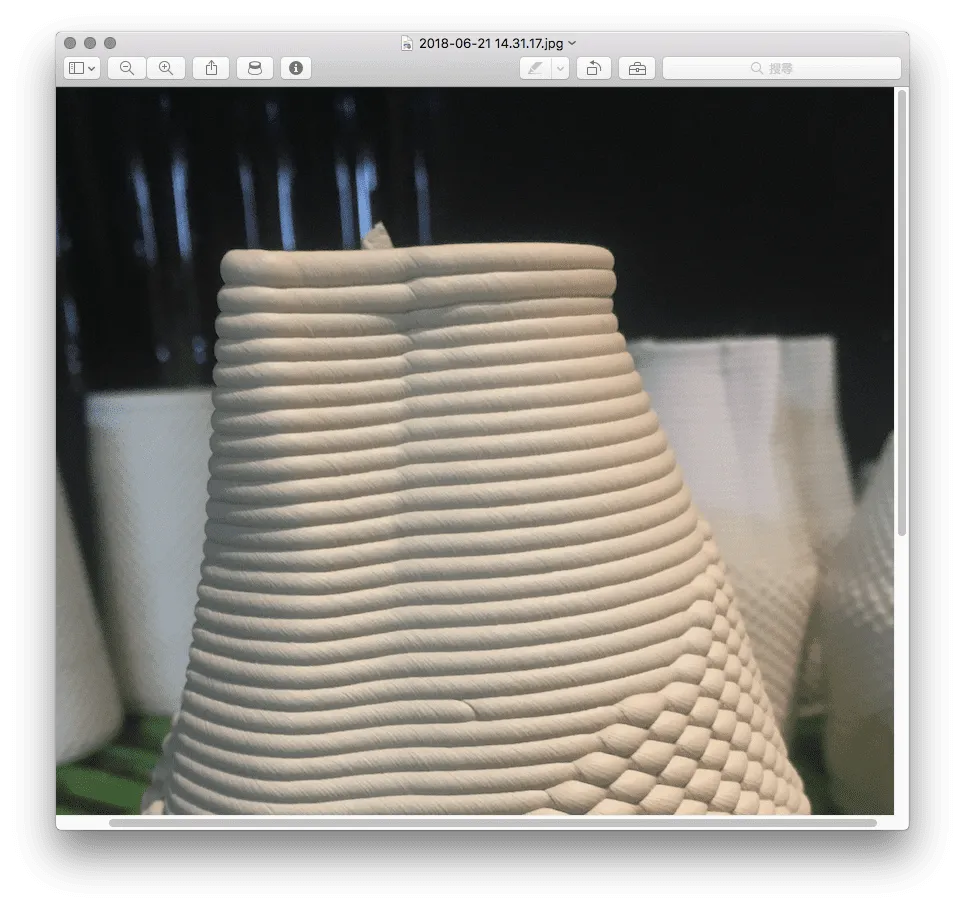
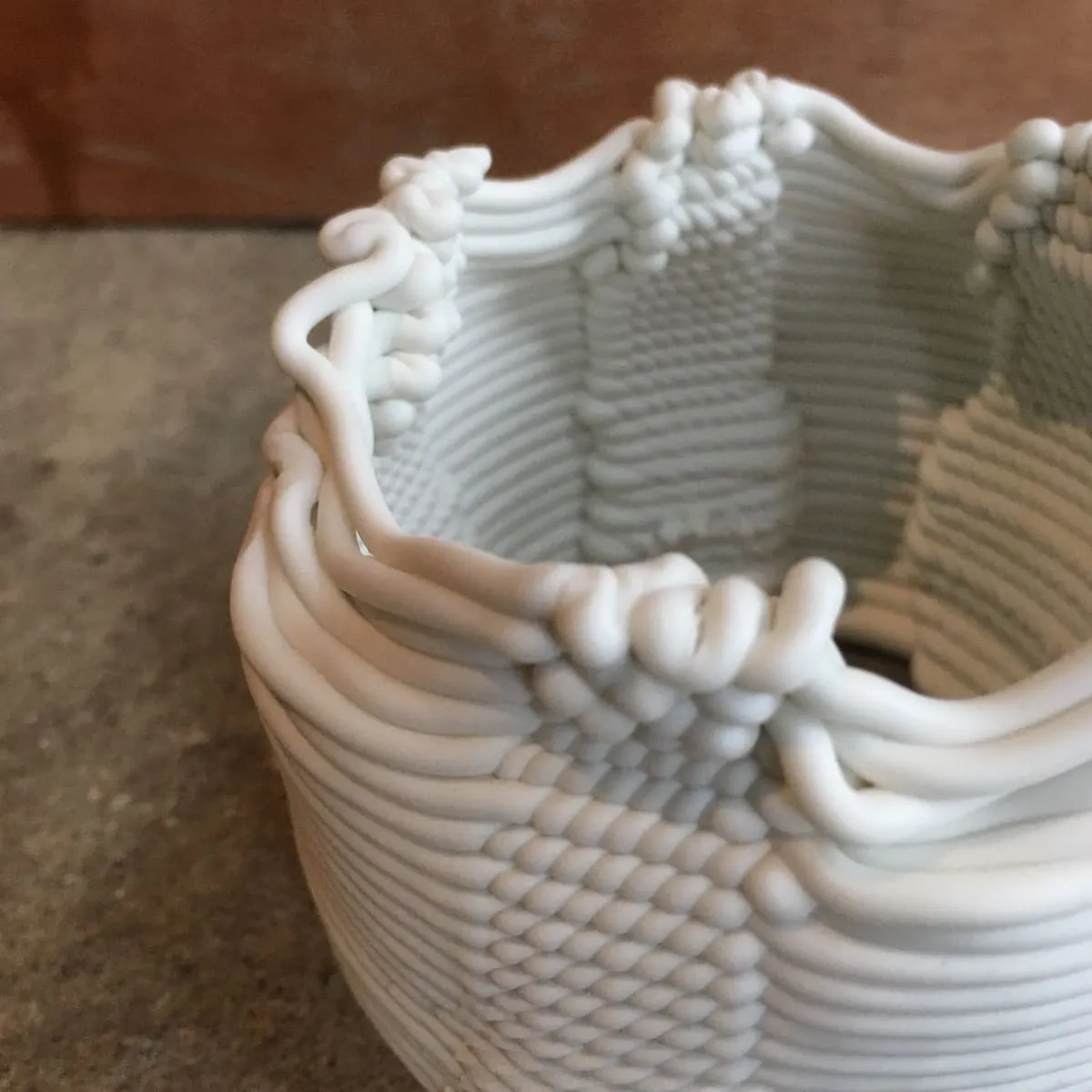
Commissioned by Binary Pottery, which focuses on ceramic 3D printing, this project explores the relationship between digital fabrication, material behavior, and craftsmanship. Binary Pottery has studied the making process for years, from the proportion of clay to the extrusion system of the machine. They also developed their own method for laying down the clay coil interactively, creating a distinctive surface pattern while reinforcing the structure of the product. 本作品受專注於陶瓷 3D 列印的 Binary Pottery 委託,探索數位製造、材料特性與工藝之間的關係。Binary Pottery 長期研究製作過程,從黏土比例到機器的擠出系統皆進行深入研究。他們也發展出一套互動式鋪設泥條的方法,在創造獨特表面紋理的同時,也強化作品本身的結構。
Process製程
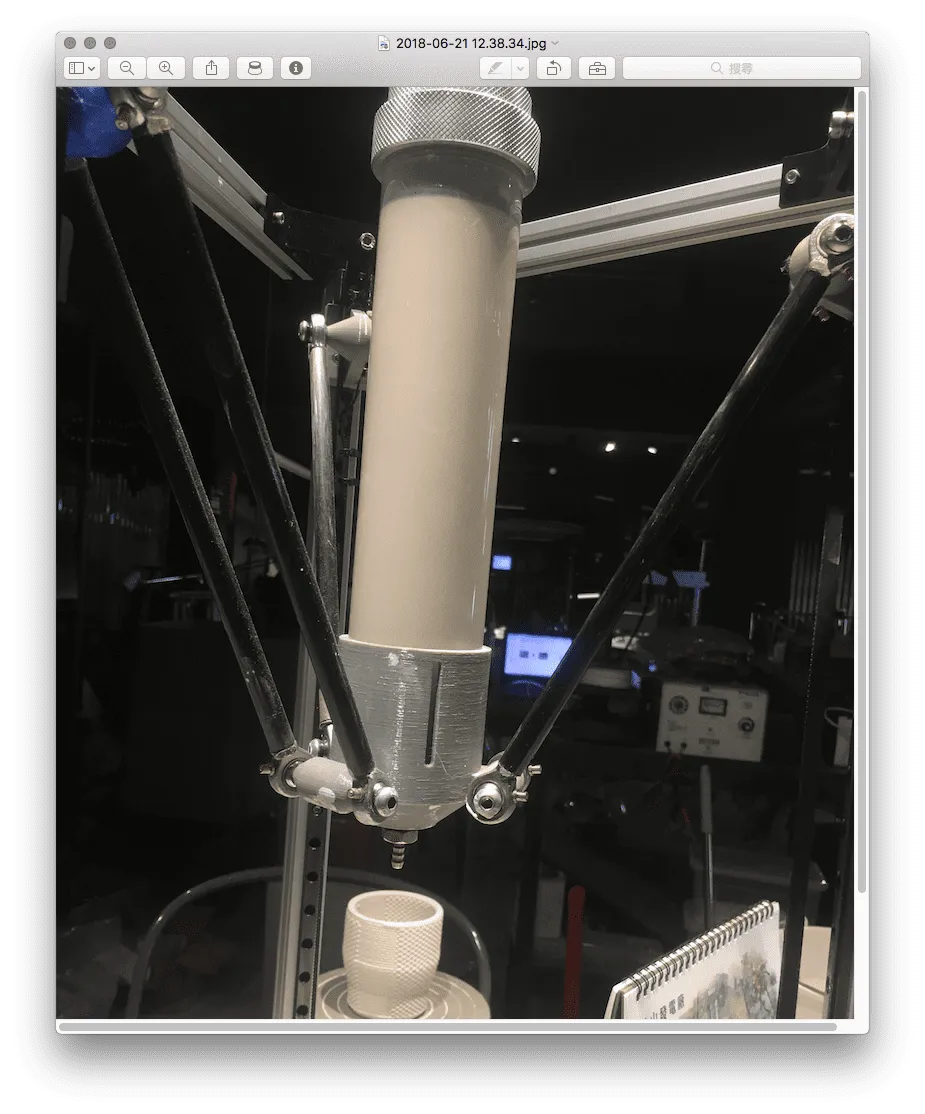
3D ceramic printing
陶瓷 3D 列印
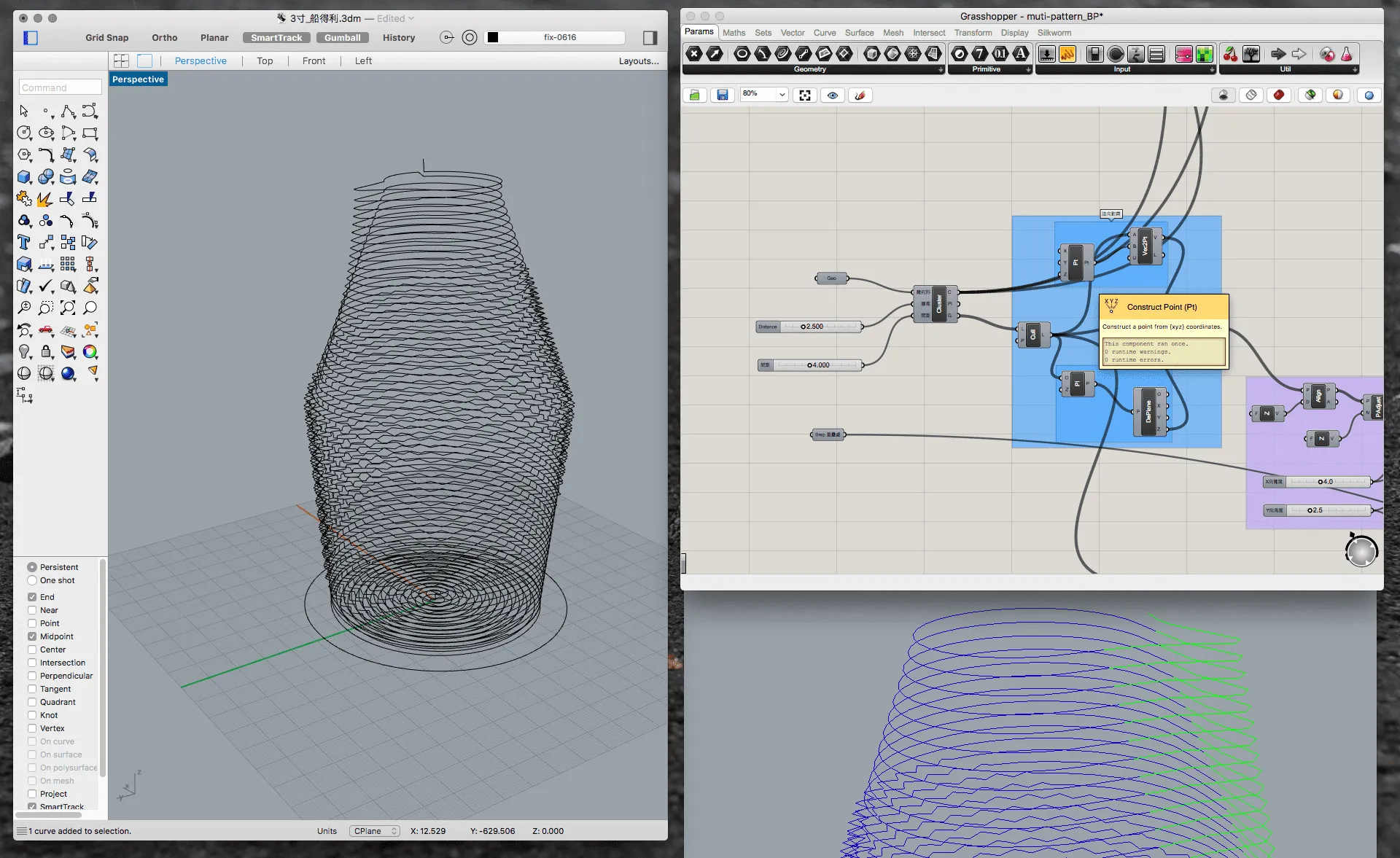
However, the self-made machine has a few restrictions, such as the limitation of width. Due to this situation, the design follows several conditions: the width is smaller than 18 cm and the height is not taller than 25 cm; the design considers a shrinkage of around 15–20% after baking; and the dot pattern should be preserved or improved. Binary Pottery also hopes to develop a tableware series based on these specifications. This is where Erco Lai began to design and research. The project has one advantage: products and prototypes can be made using the same machine. On the other hand, G-codes have to be created through Grasshopper. Thanks to his experience in digital fabrication, Erco Lai is able to handle this procedure. Nevertheless, he believes that this approach offers a glimpse into a future kind of factory and manufacturer. 然而,這台自製機器仍有一些限制,例如列印寬度的限制。因此,設計必須遵循幾項條件:寬度小於 18 公分,高度不超過 25 公分;同時考慮燒製後約 15–20% 的收縮率;並保留或進一步改善點狀紋理。Binary Pottery 也希望以這些規格為基礎發展一系列餐具,而這也成為 Erco Lai 開始進行設計與研究的切入點。這個專案的一項優勢,是可以使用同一台機器製作產品與原型。另一方面,則需要透過 Grasshopper 建立 G-code。憑藉過去數位製造的經驗,Erco Lai 能夠處理這個製程。然而,他也認為這樣的方式讓人看見了一種未來工廠與製造者的可能形式。
Objects作品
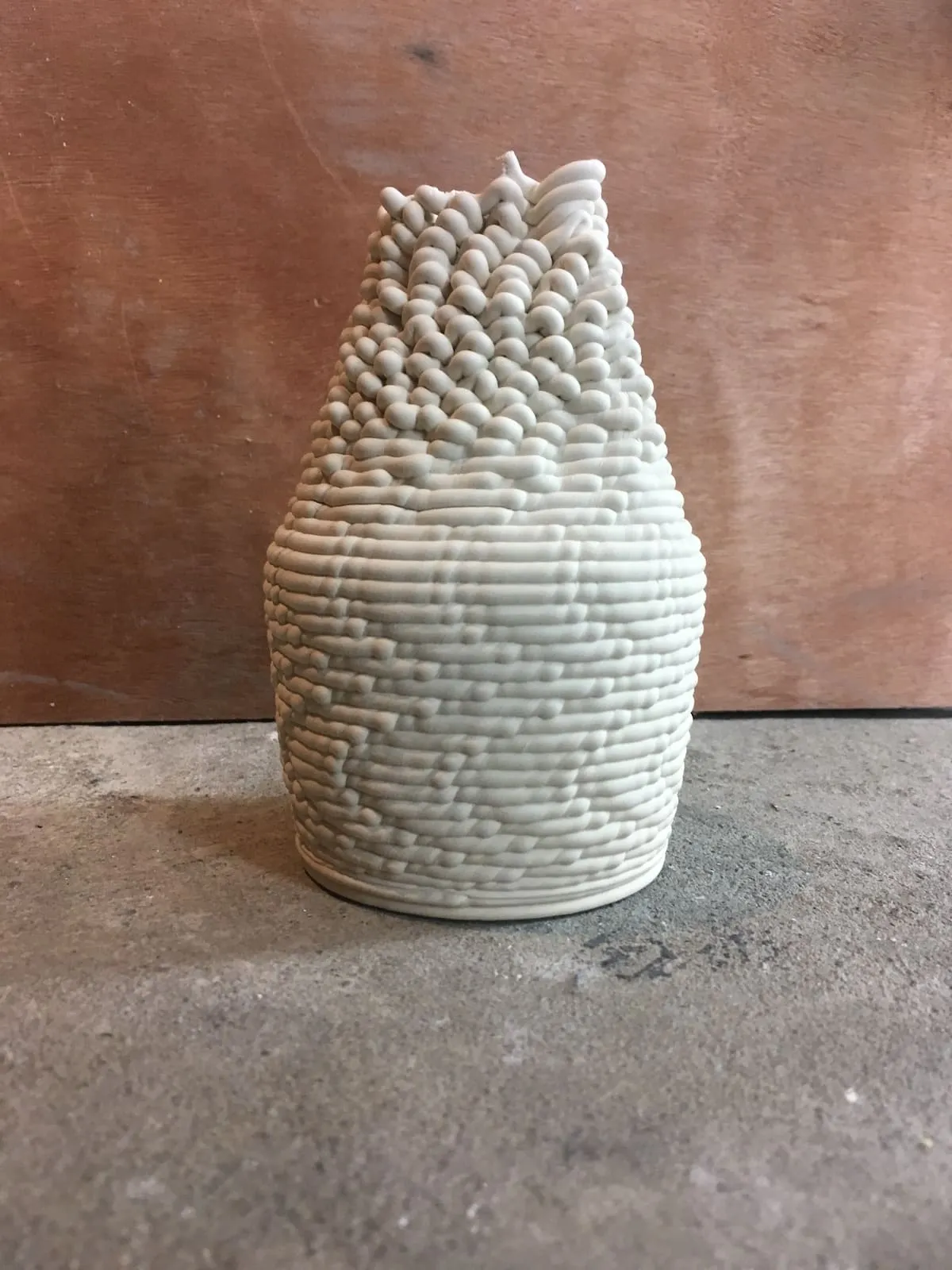
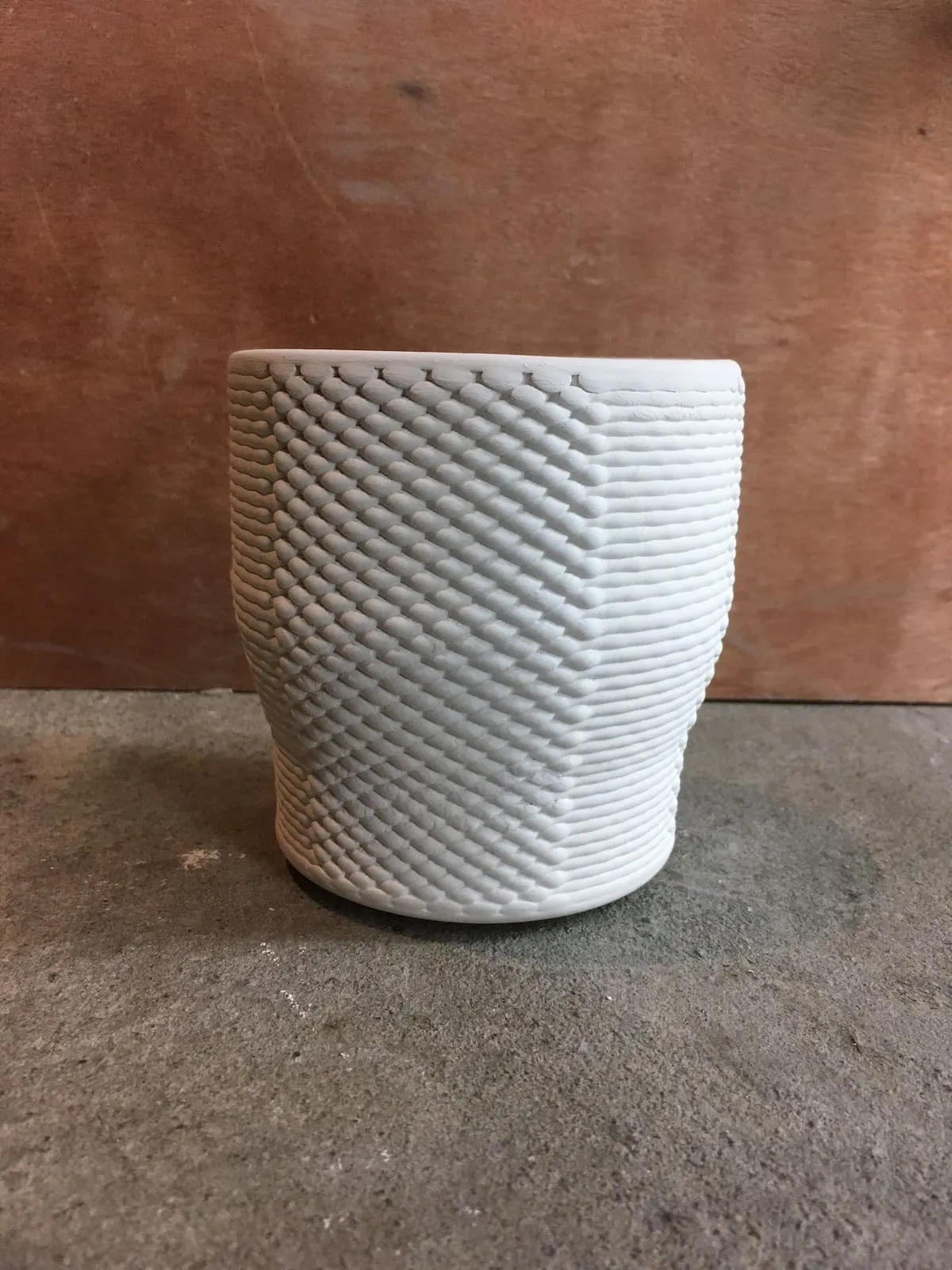
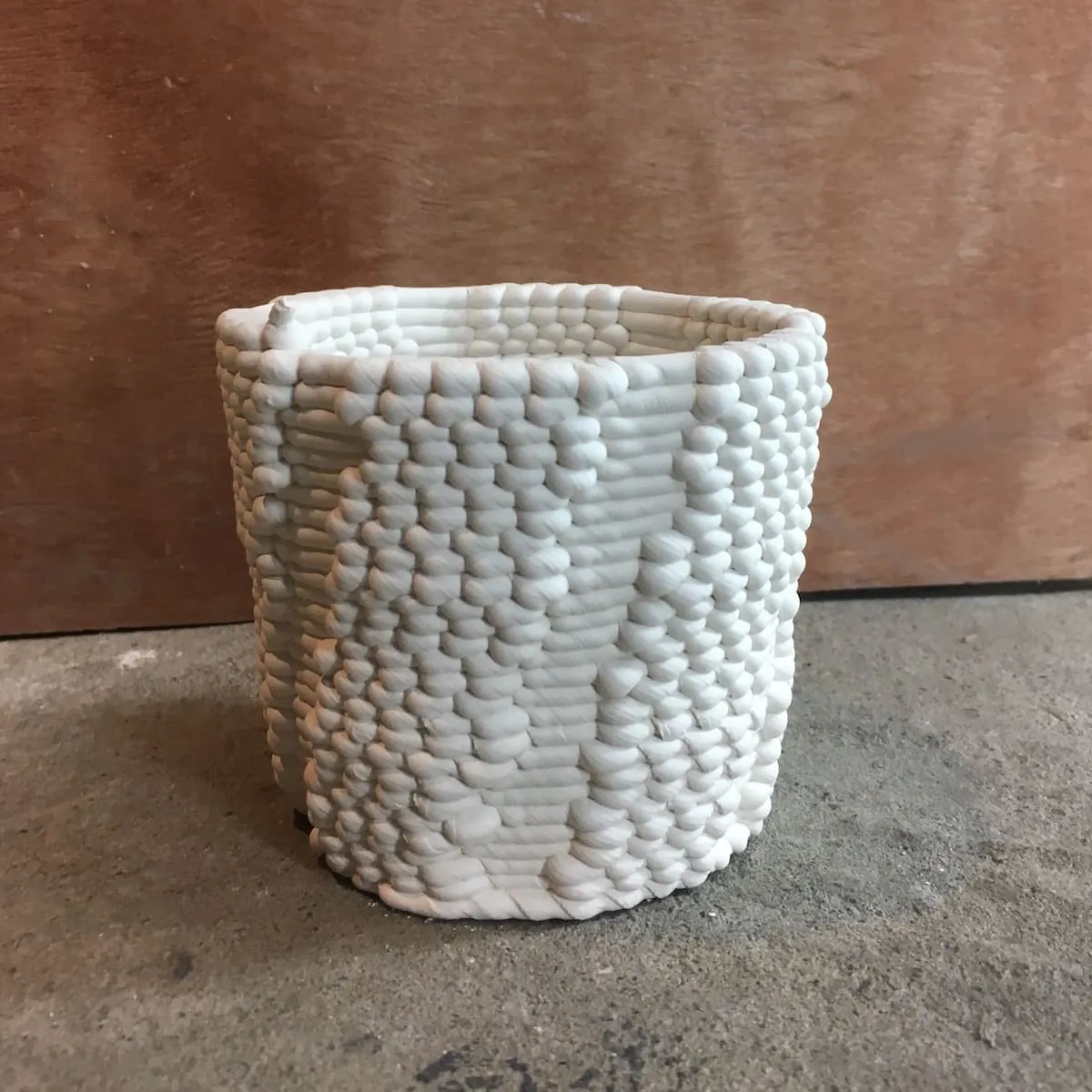
Binary jugs
Further reading 延伸閱讀
Fieldstone - The 3d-printed-stone table